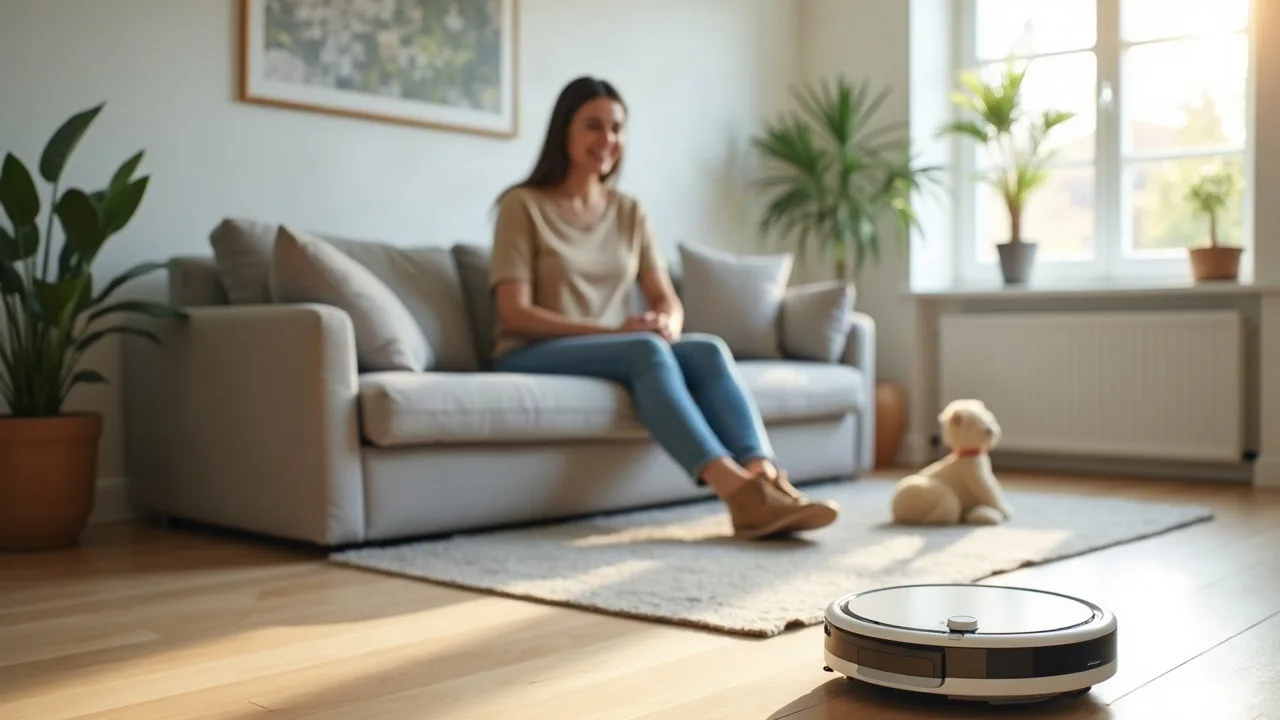
- A Robot Vacuum Cleaner suits regular maintenance on open, mostly single-level floors
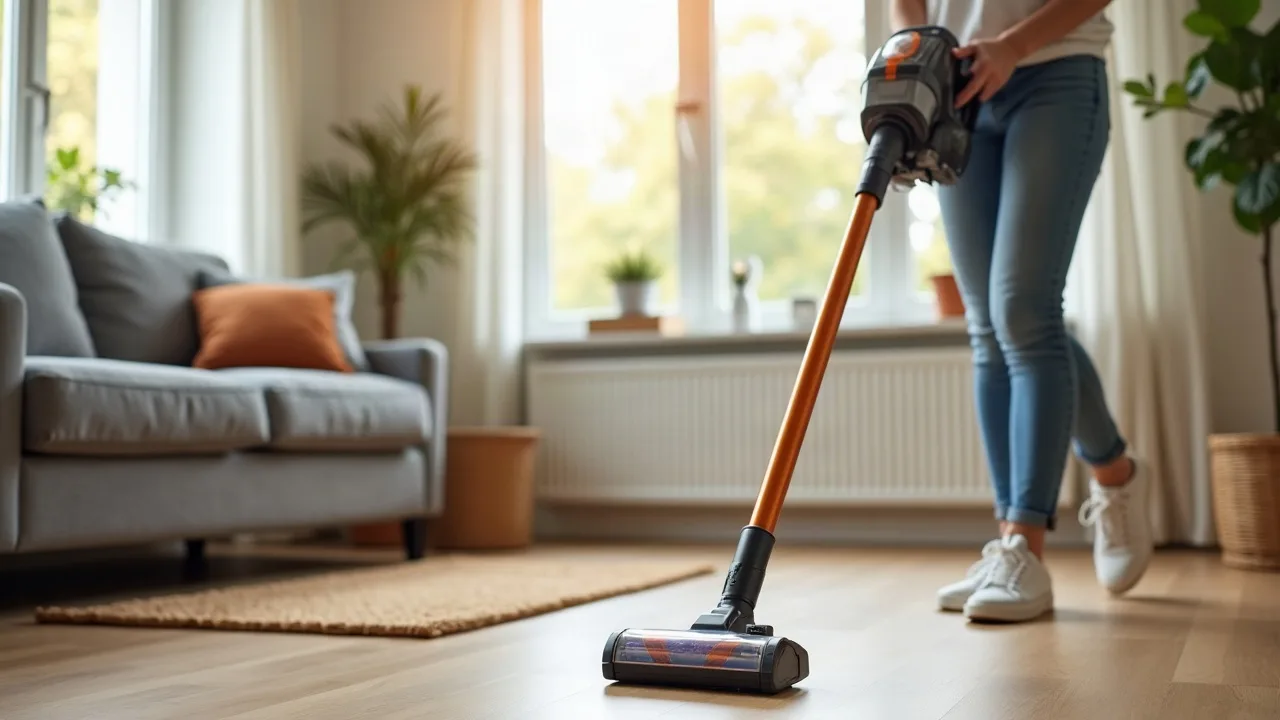
- A traditional vacuum cleaner suits stairs, upholstery, cars and heavy soiling
- Many households use both, with the robot for daily upkeep and the upright, cylinder or stick model for the rest
Vacuum cleaners have split into two broad camps. The traditional type, whether upright, cylinder or cordless stick, is pushed by hand and controlled directly. A Robot Vacuum Cleaner works on its own, following a schedule or an app command, and returns to a dock when it has finished. Neither approach is better in every situation. The more useful question is which one fits a particular home, floor type and routine.
How the two types work
A traditional vacuum cleaner relies on the user. The machine is moved across the floor, attachments are swapped for different surfaces, and the user decides how long to spend on each area. This gives direct control over where and how thoroughly cleaning takes place, and it covers surfaces beyond the floor, such as stairs, curtains, mattresses and car interiors.
A Robot Vacuum Cleaner maps a room using sensors, cameras or a laser-based scanning system, depending on the model, and then works through it in a planned pattern. Many current models also include a mopping function, a self-emptying dock, carpet detection and obstacle recognition. Some docks also wash the mop pads. These features vary by model, so the specification of each product is worth checking rather than assuming.
Direct comparison
The table sets out how the two types differ on the criteria that most often decide the question.
| Criterion | Robot Vacuum Cleaner | Traditional vacuum cleaner |
|---|---|---|
| Effort required | Low once set up; the user mainly empties the bin or dock and maintains brushes and filters | Hands-on every time; the user pushes, carries and empties the machine |
| Stairs and upholstery | Not suited to stairs; cannot clean sofas, mattresses or curtains | Handles stairs and soft furnishings with the right attachments |
| Under furniture | Low-profile models can reach beneath many sofas and beds, subject to clearance | Reach depends on the tool; low spaces may need a flexible nozzle or an extension |
| Deep cleaning of carpets | Suited to regular upkeep; thick pile and heavy soiling may need additional passes | Direct pressure and repeated passes suit thorough cleaning |
| Preparation | Floors need to be clear of cables, socks and small objects | Little preparation; the user moves obstacles as they go |
| Storage and setup | Needs a dock with space around it and a power socket | Needs cupboard space; no permanent position required |
Who each option suits
- Robot Vacuum Cleaner: households that want regular, low-effort upkeep of hard floors and low-pile carpets, particularly where pets shed hair, where time is limited, or where mobility makes pushing a machine difficult.
- Traditional vacuum cleaner: homes with several staircases, a lot of upholstery, deep-pile rugs, or users who prefer to control the process and clean specific spots on demand.
Which home layouts favour which type
Open-plan flats and single-storey homes with mostly continuous flooring give a robot the clearest run. It can cover the main living areas without being carried between levels. In multi-storey houses, a robot cannot climb stairs, so it either stays on one floor or has to be moved by hand. Some models can store maps of several floors, but the carrying remains manual.
Clutter is the other main factor. Homes with many loose cables, toys or low furniture with narrow gaps can cause a robot to stall or need rescuing. Models with obstacle recognition and the ability to cross thresholds reduce this problem but do not remove it. Where the floor is usually tidy, a robot tends to run without much supervision.
Floor type matters too. Hard floors and low-pile carpets suit robots well, and models with mopping functions can also deal with light, everyday marks on sealed hard flooring. Long-pile rugs, fringed edges and very dark floors can be harder for some models, so the manufacturer's guidance on carpet types is worth reading.
Features worth checking in a Robot Vacuum Cleaner
Robot models differ more from one another than traditional vacuum cleaners do, so a few points are worth comparing.
- Height and clearance: slim designs fit under more furniture, and a retractable sensor turret can also help with low spaces.
- Obstacle crossing: some models raise their chassis or body to climb door thresholds. The stated maximum height should be compared with the thresholds at home.
- Dock type: a self-emptying dock reduces how often the bin needs attention. Some docks also wash and dry the mop pads, which affects how much manual upkeep remains.
- Mopping method: pads may spin, vibrate or lift away from carpet. Households with mostly carpet may not need this feature at all.
- Navigation and recognition: camera and sensor systems influence how a robot copes with cables, pet mess and furniture legs.
- Brush design: anti-tangle brushes are relevant for long hair and pet fur, where winding around the roller is a common nuisance.
For a traditional vacuum cleaner, the equivalent checks are weight, cord or battery arrangement, filter type, bag or bagless design, and the range of attachments supplied.
Using both together
The choice is not always either/or. A common arrangement is a Robot Vacuum Cleaner for daily or weekly floor upkeep, with a traditional or cordless stick model kept for stairs, upholstery, car interiors and occasional deeper cleaning. This reduces the workload of the manual machine without leaving gaps that a robot cannot reach.
Live from the comparison Ranking and prices: as of today 07:30

DREAME X60 Pro Ultra Complete Robot Vacuum and Mop with UltraExtend Arms | AI OmniSight Sy...
- Dual UltraExtend Arm Technology: Dual UltraExtend Arm Technology extends the sid...
- 10cm ProLeap Obstacle Crossing: ProLeap Obstacle Crossing clears double-layer th...
- AI OmniSight System 3.0 with Proactive Light: AI OmniSight System 3.0 recognizes...

roborock Saros 10 Robot Vacuum Cleaner with Mop, 3.14-Inch Ultra Slim | 22,000 Pa, Zero-Ta...
- 𝐑𝐞𝐚𝐜𝐡 𝐭𝐡𝐞 𝐔𝐧𝐫𝐞𝐚𝐜𝐡𝐚𝐛𝐥𝐞:Featuring a sleek 3.14-inch ultra-thin design, the retract...
- 𝐙𝐞𝐫𝐨 𝐓𝐚𝐧𝐠𝐥𝐢𝐧𝐠 𝐌𝐚𝐱𝐢𝐦𝐮𝐦 𝐂𝐥𝐞𝐚𝐧𝐢𝐧𝐠: Enjoy the powerful suction of a 22,000Pa tangle-...
- 𝐕𝐢𝐛𝐫𝐚𝐑𝐢𝐬𝐞 𝟒.𝟎 𝐒𝐞𝐥𝐟-𝐃𝐞𝐭𝐚𝐜𝐡𝐢𝐧𝐠 𝐌𝐨𝐩𝐩𝐢𝐧𝐠 𝐒𝐲𝐬𝐭𝐞𝐦: Effortlessly switch between vacuumi...

roborock Saros 20 Set Robot Vacuum Cleaner with Mop, 36,000 Pa Suction | 3.46 in Double-La...
- 𝐈𝐧𝐝𝐮𝐬𝐭𝐫𝐲-𝐋𝐞𝐚𝐝𝐢𝐧𝐠 𝐎𝐛𝐬𝐭𝐚𝐜𝐥𝐞-𝐂𝐫𝐨𝐬𝐬𝐢𝐧𝐠 𝐏𝐨𝐰𝐞𝐫: AdaptiLift Chassis 3.0 dynamically rai...
- 𝐔𝐥𝐭𝐫𝐚-𝐏𝐫𝐞𝐜𝐢𝐬𝐞 𝐍𝐚𝐯𝐢𝐠𝐚𝐭𝐢𝐨𝐧 𝐰𝐢𝐭𝐡 𝐅𝐞𝐰𝐞𝐫 𝐌𝐢𝐬𝐬𝐞𝐝 𝐒𝐩𝐨𝐭𝐬: Powered by StarSight Autonomou...
- 𝐂𝐥𝐞𝐚𝐧𝐬 𝐔𝐧𝐝𝐞𝐫 𝟑.𝟏𝟑 𝐢𝐧 𝐅𝐮𝐫𝐧𝐢𝐭𝐮𝐫𝐞 𝐰𝐢𝐭𝐡 𝐄𝐚𝐬𝐞: With its ultra-slim design, Saros 20 g...
Conclusion
A Robot Vacuum Cleaner suits tidy, mostly single-level homes where regular upkeep matters more than intensive cleaning. A traditional vacuum cleaner suits homes with stairs, soft furnishings and heavier soiling, or users who prefer direct control. Where both situations apply, running the two together is a practical solution. Checking furniture clearance, threshold heights and floor types before buying helps to match the machine to the home.